


ABO1
There are several barriers to entry for a disabled user into cycling, independence, cost and suitability for the user. Available options are designed for a smooth ride in the park, making them unsuitable for popular cycling destinations such as forests where surfaces are uneven and unpaved. Most inclusive bicycles require a secondary user to assist/propel the user when out cycling. From talking with users of current inclusive bicycles, a common downfall of these cycles are the lack of independance and the cost of them.
My project saw the design of a front fork attachement for a mountainbike. This prototype is designed to suit a user with balance issues, the fork accomodates 2 front wheels transforming the bike into a tricycle. The user cycles the bike themselves with the fork aiding their balance. This design doesn't need a secondary user to assist therefore making it independant.
I contacted Orange bikes as they have developed an inclusive mountain bike, the AD3. This was designed by Alex Desmond the senior Engineer at Orange. Alex helped me develop my product and gave me some useful advice along the way regarding the user needs and things he discovered while developing the AD3.
Watch the intervew

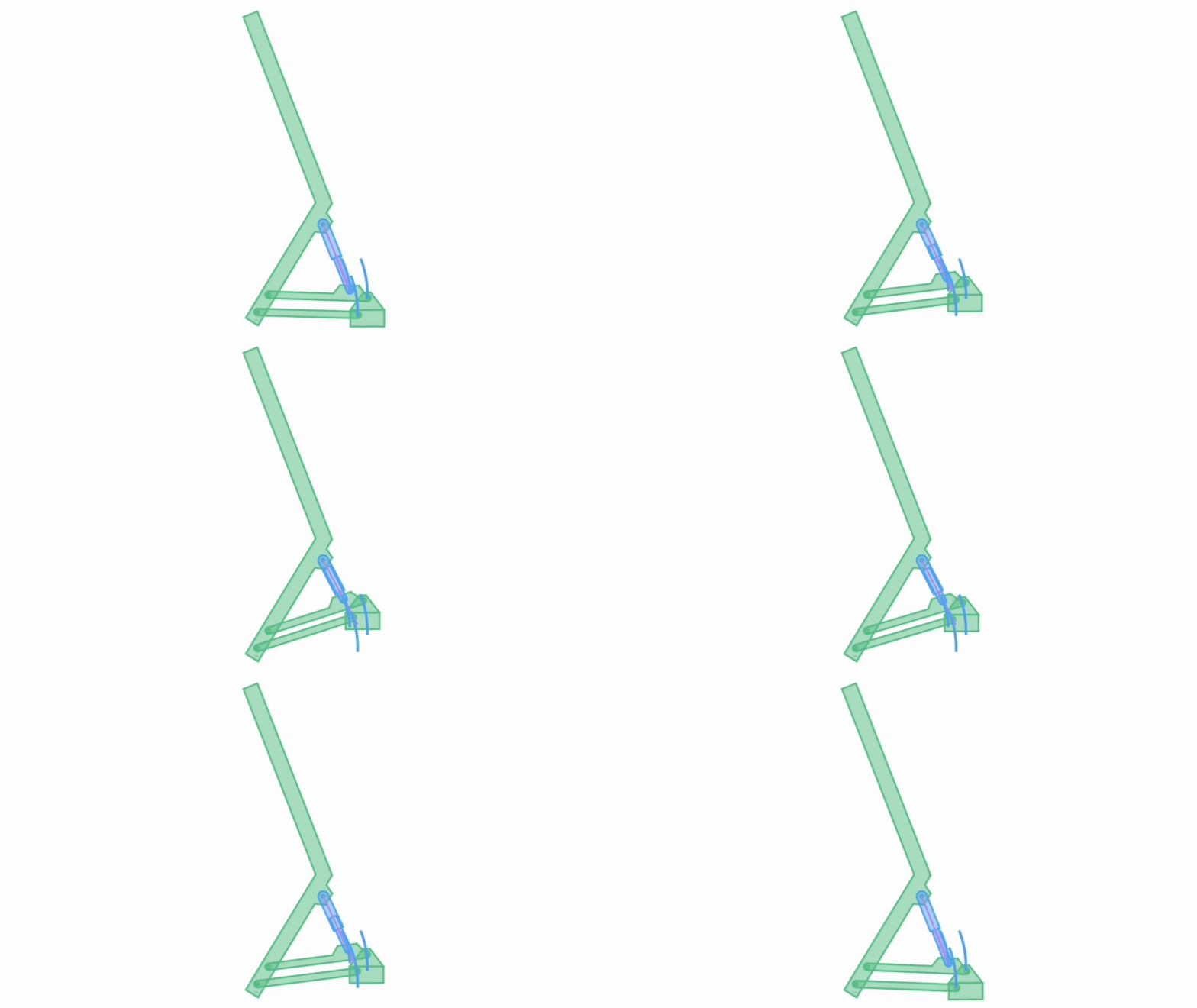
The design utilises 2 front shock-absorbers to allow the bike to lean over. When riding a bike, leaning over to the side you wish to turn to initiates the turn. On a tricycle this is unable to happen due to the front wheels being fixed resulting in a larger turning circle, less agile bike. With the AB01 the bike is able to lean aswell as turn while keeping both front wheels on the ground.


The bike is able to lean through the compression of the shock. As seen below the movement through the swing arm.

The design fits any standard headtube on a bike the user can choose the bike it is attached to, they may opt for a less expensive bike to suit there budget or a higher spec E-bike within their budget. The design also uses standard Aluminium tubing bonded to addatively manufactured parts. As this was a prototype the parts are 3D printed from ABS at 85% density. These would be additivelty manufactured from Aluminum for production. By bonding the tubes into the parts this poses several benefits for manufacture, it is much quicker than welding components together with the use of jig but also the skillset required to bond is less than a TIG welder therefore cutting production costs.

All the 3D printed parts required for one fork leg.
The CAD renders below show the assembly of the fork legs in more detail. Figure 1 demonstrates how a double lap shear joint increases surface area of the contact points between the aluminium tubing and elbow lug. As the tubing and lug are bonded together a large contact area is important.Figure 2 presents the assembly of the fork leg exploded, this displays all components including the bolts and how they are assembled.

1
